![]() |
| All together: Annual Lilac-Bloom Dinner last Friday at our house. |
| Newman came for the occasion. |
![]() |
| Gabby’s always happy with guests! |
Sing a new song, get outside,
Alyce
![]() |
| All together: Annual Lilac-Bloom Dinner last Friday at our house. |
| Newman came for the occasion. |
![]() |
| Gabby’s always happy with guests! |
Sing a new song, get outside,
Alyce
I’m always on the lookout for beautiful, delicious food that is also healthy. To say nothing of the delight in making a meal that didn’t empty the wallet at the check-out. Enter this sweet and toothsome goodie, “Udon Soup with Vegetables and Tofu,” that’s just as far away from your capital T-typical noodle soup as it can get without falling off the edge of the comparison. Add vegetables, lovingly cut PREE-cisely teensy of course, a nice slew of tofu, and you’re eating a recipe from Elizabeth Andoh, who is number forty-one on Gourmet Live’s list of 50 Women Game-Changers.
Living in Japan for for decades, Elizabeth Andoh attended Yanagihara Kinsaryu School of Traditional Japanese Cuisine (Tokyo), wrote several Japanese cookbooks (scroll down for list), and for years served as Gourmet magazine’s Japanese food writer. She also teaches cooking classes in Tokyo if you’re ever out that way. Most recently, Andoh published Kibo: (“Brimming with Hope) Recipes and Stories
from Japan’s Tohoku…
This cookbook is a heartfelt and fascinating tribute to the food, traditions, and courage of the people of Japan’s Tohoku region before and after the devastation of the earthquake and tsunami of March 11, 2011. It features traditional recipes such as Miso-Seared Scallops, Pinched-Noodle Soup with Pork, Salmon-Stuffed Kelp Rolls, and basics like rice, stocks, and sauces, along with sake pairings and essays on Japan in recovery from journalists and food writers.
courtesy amazon
If you’d like to give the Udon Soup a whirl, it’s yum, but I’ll give a few heads’ ups:
1. Read the recipe all the way through so you have a sense of the order in which the steps take place. For instance, you’ll need 30-60 minutes to soak shiitakés for the broth before you really begin.
2. Plan on going to the Asian market or substituting some ingredients.
3. While it looks quick, and doesn’t really take long, the chopping of the ingredients
is all to matchstick-size or shredded in the case of the mushrooms. Plan your time accordingly.
4. If you taste the soup before adding the greens and grated ginger, you’ll think it needs seasoning. The fresh ginger, however, is the kicker here. Warm and giving, it folds the whole bowl together with its pungent heat.
5. My soup had little broth and I added a bit of vegetable broth toward the end of the cooking.
Here’s how:
courtesy New Asian Cuisine and Andoh’s book KANSHA: Celebrating Japan’s Vegan and Vegetarian Tradition
serves 4
.
3 or 4 large dried shiitaké mushrooms
3 cups water I thought there was too little broth; you could increase the water here.
11/2 ounces daikon tops, kale, or other leafy greens, loosely tied in a bundle with kitchen twine
3 sheets thin fried tōfu (page 282)
4 ounces fresh mushrooms, preferably maitaké (page 272), trimmed and hand shredded into 1/2-inch lengths
1 teaspoon sugar
1 tablespoon saké Had no saké. Used white wine.
1 slender carrot, about 2 ounces, scraped and cut into matchsticks
2 ounces daikon, scraped and cut into matchsticks
1 tablespoon mirin
1 tablespoon light-colored soy sauce
2 sheets hoshi yuba, softened (page 261) and coarsely shredded, or 1/4 cup finely broken hoshi yuba (1/4-inch bits) I could not find this and didn’t add it.
11/2 teaspoons soy sauce
1 tablespoon cornstarch
2 tablespoons cold water
Cooked udon noodles, for serving hot (page 55) Easy to find, but you could sub whole wheat linguine.
1 tablespoon grated fresh ginger
Extract a stock from the dried shiitaké mushrooms: Break off the stems and set them aside for making stock on another occasion. Here you are using only the dried shii¬také caps to make a stock (and to cook later with the other vegetables). Soak the caps in the water in a bowl for at least 30 minutes and preferably for 1 hour or more. Remove the caps from the water and rinse them to remove any gritty material, then squeeze gently. Pour the soaking water through a fine-mesh strainer (or disposable coffee filter) into a clean bowl to remove unwanted bits that may have settled at the bottom of the bowl. Set the stock aside. Slice the dried shiitake caps into very narrow strips.
Bring a small saucepan filled with water to a boil. Blanch the bundle of leafy greens for 30 seconds, or until they wilt and turn a vivid green. With long chopsticks or tongs pull them from the pot and set aside. Blanch the tōfu slices in the same pot for 1 minute, or until oil swirls on the water’s surface. Drain, cut each slice lengthwise in half, and then cut each half crosswise into short, narrow strips. Blot away excess oil from the strips. When the greens are cool enough to handle, squeeze out excess moisture, chop coarsely, and set aside.
Heat a wok or a large, heavy skillet over high heat. Toss in the tōfu and allow the pieces to sear for a moment until lightly browned at the edges. Add the fresh mushrooms, then the slivers of softened dried shiitaké and stir-fry for about 1 minute, or until any excess liquid has evaporated and the mushrooms are aromatic. Sprinkle with the sugar and continue to stir-fry for 30 seconds longer. Add the saké and stir-fry until the pan is dry.
Add the stock (it will sizzle and sputter a bit, so be careful) and lower the heat to maintain a steady but not-too-vigorous simmer. Skim away the first large cloud of froth that appears with a fine-mesh skimmer. More froth will appear (this is normal when using shiitaké mushroom stock) as you continue to simmer. Cook for 5 or 6 minutes, then skim away the froth again.
Add the carrot and daikon, season the soup with the mirin and light-colored soy sauce, and continue to sim¬mer for 2 or 3 minutes, or until the vegetables are firm but tender and the flavors are melded.
Add the yuba and stir to distribute, and then add the soy sauce. In a small bowl, stir together the cornstarch and cold water. Add the mixture to the pan, raise the heat to high, and stir until thickened and glossy. The final soup will have the consistency of a thin sauce.
Divide the noodles among 4 warmed bowls, then divide the soup evenly among the bowls. Top each serving with some of the chopped greens and a small mound of ginger. Serve immediately.
Read Amy Sherman’s 2010 interview on Epicurious with Elizabeth Andoh
Check out the list of lovely cookbooks available from Elizabeth Andoh
~~
Want to read more Elizabeth Andoh recipes? Check out the great blogs below:
Val – More Than Burnt Toast, Taryn – Have Kitchen Will Feed, Susan – The Spice Garden
Heather – girlichef, Miranda – Mangoes and Chutney, Amrita – Beetles Kitchen Escapades
Mary – One Perfect Bite, Sue – The View from Great Island, Barbara – Movable Feasts
Linda A – There and Back Again, Nancy – Picadillo, Mireya – My Healthy Eating Habits
Veronica – My Catholic Kitchen, Annie – Most Lovely Things, Jeanette – Healthy Living
Claudia – Journey of an Italian Cook, Alyce – More Time at the Table
Kathy – Bakeaway with Me, Martha – Simple Nourished Living, Jill – Saucy Cooks
~~~
If you liked Udon Soup with Vegetables and Tofu, you might like:
![]() |
| Green Onion Pancakes |
Sing a new song, make a new soup!
Alyce
| Hot lunch on a cold spring day |
Outside the window in the new/old (1915) St. Paul house, it’s fairly gray. Everything’s gray, in fact. Melting snow, sky, sun, trees…even the birds appear kind of gray. But spring it is!
| Jack Sparrow and Friend |
When you’ve moved, the chores are myriad. It seems you’re always running to the hardware store for a light switch cover or to Target for garbage bags and peanut butter. If you’re not running, you’re on the phone with the phone company or recycling folks. If you’re not on the phone, you’re looking at paint samples or asking where the post office is. (What happened to phone books?)
Sooner or later, plates seem to be on shelves and towels are clean and folded in the bathroom. You know where to turn the light on for the basement and have figured out what that horrible sound is between the floors or in the walls. (Hot water pipes.) You have the turn to your house memorized and don’t have to count houses from the corner anymore. And one day, you start making meals again–hardly noticing the skipped nights or that you’re in a different kitchen. Well, I wouldn’t go that far. I am definitely in a different kitchen, though I’m feeling the similarities as I get things squared away.
I had things to do this morning like
Cool thing was, these are typical house chores–not moving chores. We’ve been here long enough for the bathrooms to need a scrub.
So when I got done with the morning work-out, I wanted real food for lunch. I was sure my hard-working husband wanted some, too. Scouting out the frig and pantry (still not full, of course), a big cauliflower reared up its head called me by name. A quick look around the counter and I located onions, shallots, garlic, apples and one lone pretty ripe pear. I thought I’d throw most of it in the oven to roast while I did one last chore and then puree it all with some chicken stock and curry powder. Here it is just for you.
As Dave and I sat down to eat, Stravinsky’s “Rite of Spring” (1913) came on the local NPR and the day just came together. A spring-like light, but warming soup with a kick. I just couldn’t figure out how Bach’s birthday figured in, but it’s today, too. Happy Birthday, Johann. And thanks for Bach, God.
Curried Roasted-Cauliflower Soup
1 head cauliflower, cut into florets
1 apple, peeled and cut up into eighths
1 large onion, same drill
4t olive oil, divided
Sprinkle of kosher salt and freshly ground pepper
1 shallot, cut in large pieces
1 garlic clove, same drill
1 small carrot, minced
1 stalk of celery, minced
1 ripe pear, peeled and cut up
1 t curry powder, divided
Pinch each cinnamon and crushed red pepper
1 qt chicken or vegetable stock
1/2 c each white wine and water (or 1 c water)
1/3 c parsley, chopped
1/8 t cinnamon
1/4 t kosher salt
1/8 t white pepper, ground
Preheat oven to 350 F. On a large baking sheet, place cauliflower, onion and apple. Drizzle with 2t oil and sprinkle with salt and pepper. Place sheet in oven and roast for about 30 minutes.
Meantime, in a small soup kettle (4qt), saute shallot, garlic, carrot and celery in the other 2t olive oil about 5 minutes over low heat, taking care to not burn the shallot and garlic. Add pear, 1/2 t of the curry powder, parsley, cinnamon and crushed red pepper. Stir and saute another minute or so. Add stock, wine and/or water, cinnamon, salt and pepper and stir. Bring to a boil and lower heat to a bare simmer.
When cauliflower, apple and onion are roasted, add them to the stockpot and stir. Bring soup up to a boil and lower heat to a slow boil. Add rest of curry powder. Let cook 5-10 minutes. Puree with immersion blender or in batches in the food processor (carefully). Taste, adjust seasonings and serve hot with a piece of buttered whole wheat toast.
Easier yet: Roast everything, add to stock and puree. Leaving out fruit, celery, carrot, etc. will produce a more pronounced cauliflower-tasting soup, but also makes things simpler.
Now I’m off to Ace to buy a mesh strainer for the end of the washing machine hose. Oh well.
Sing a new song or warm up your fingers and give Bach a whirl,
Alyce
![]() |
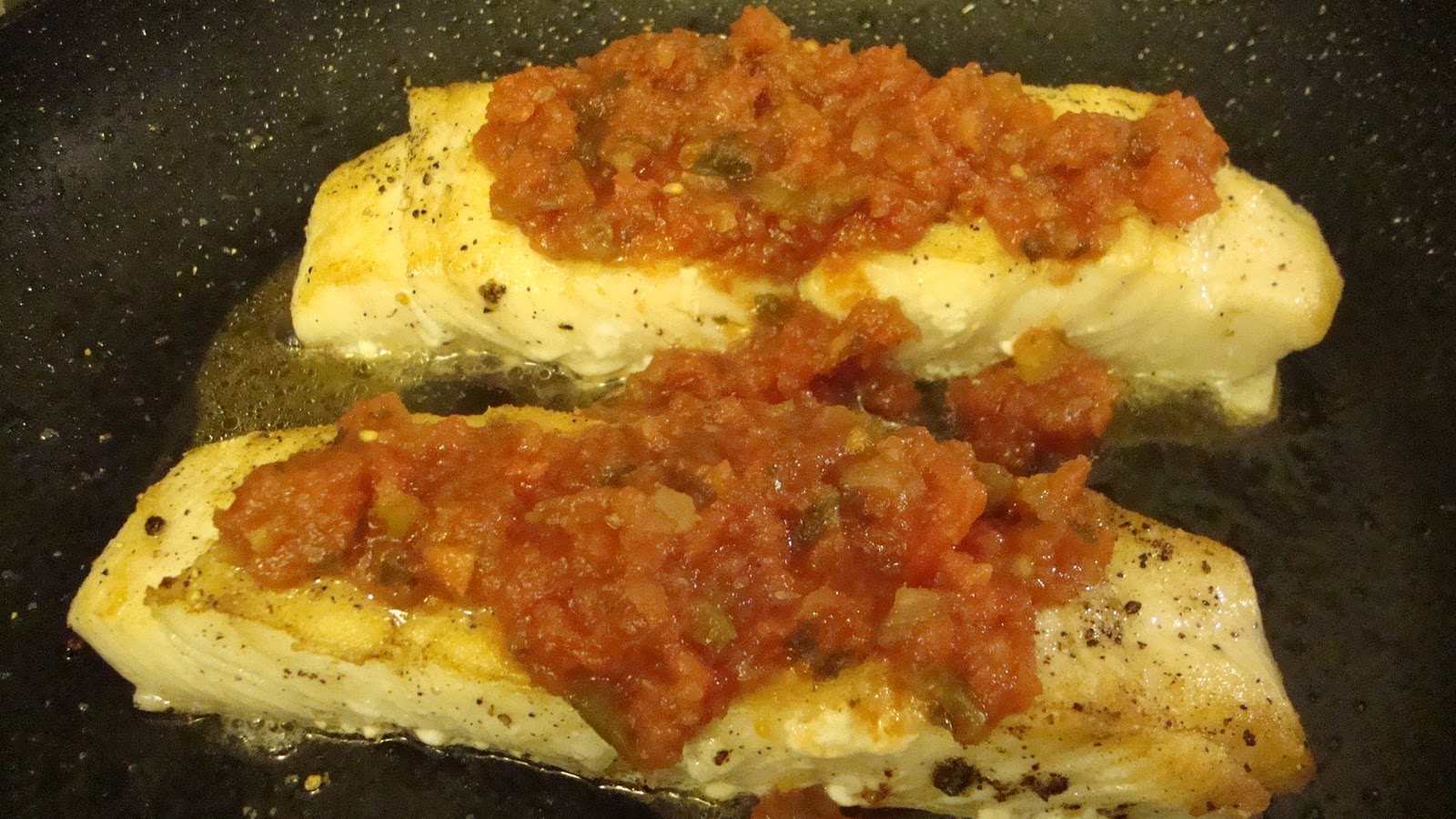
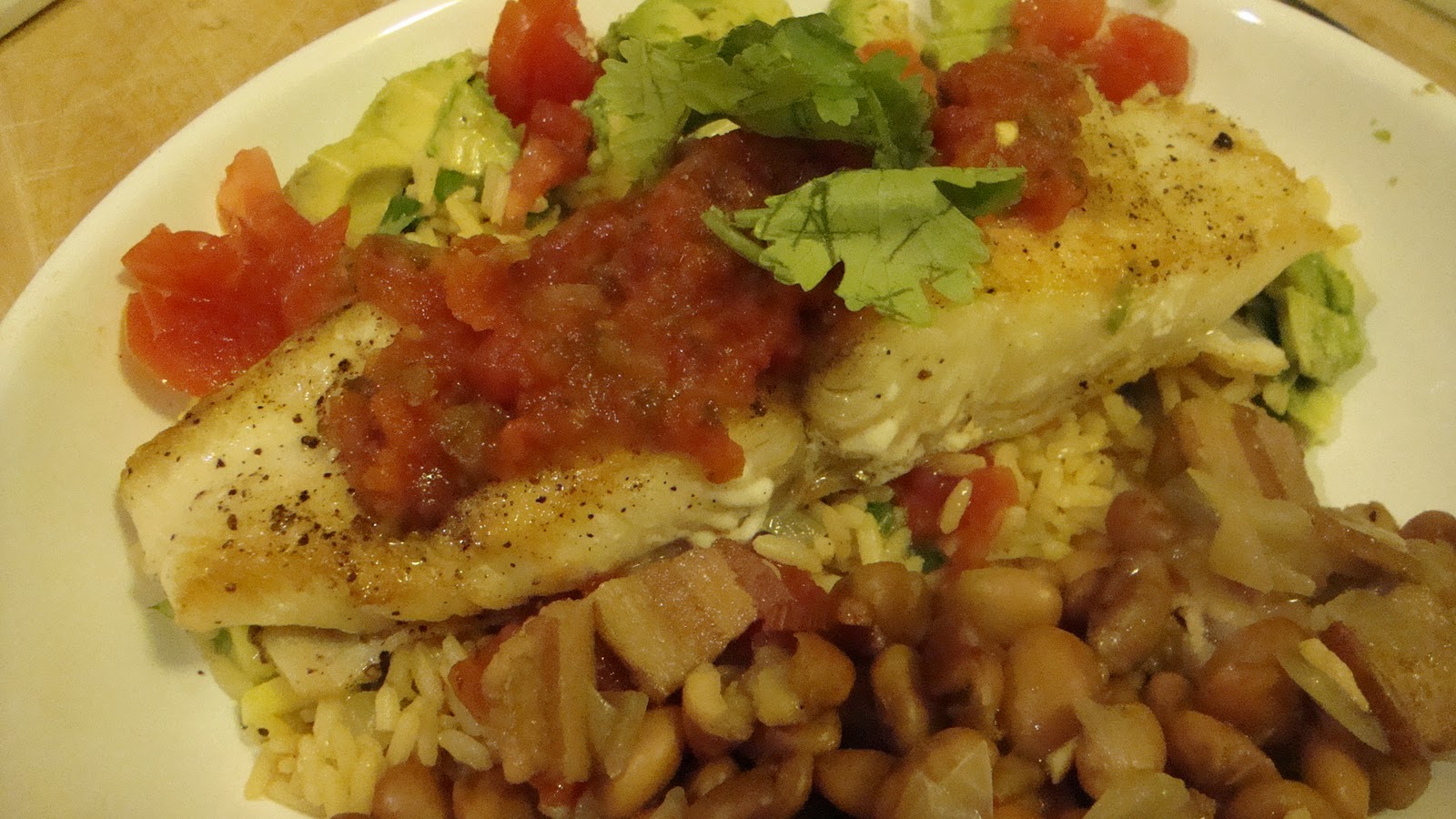
| Pico de Gallo Halibut on Warm Rice Salad with Bacon Pintos |
![]() |
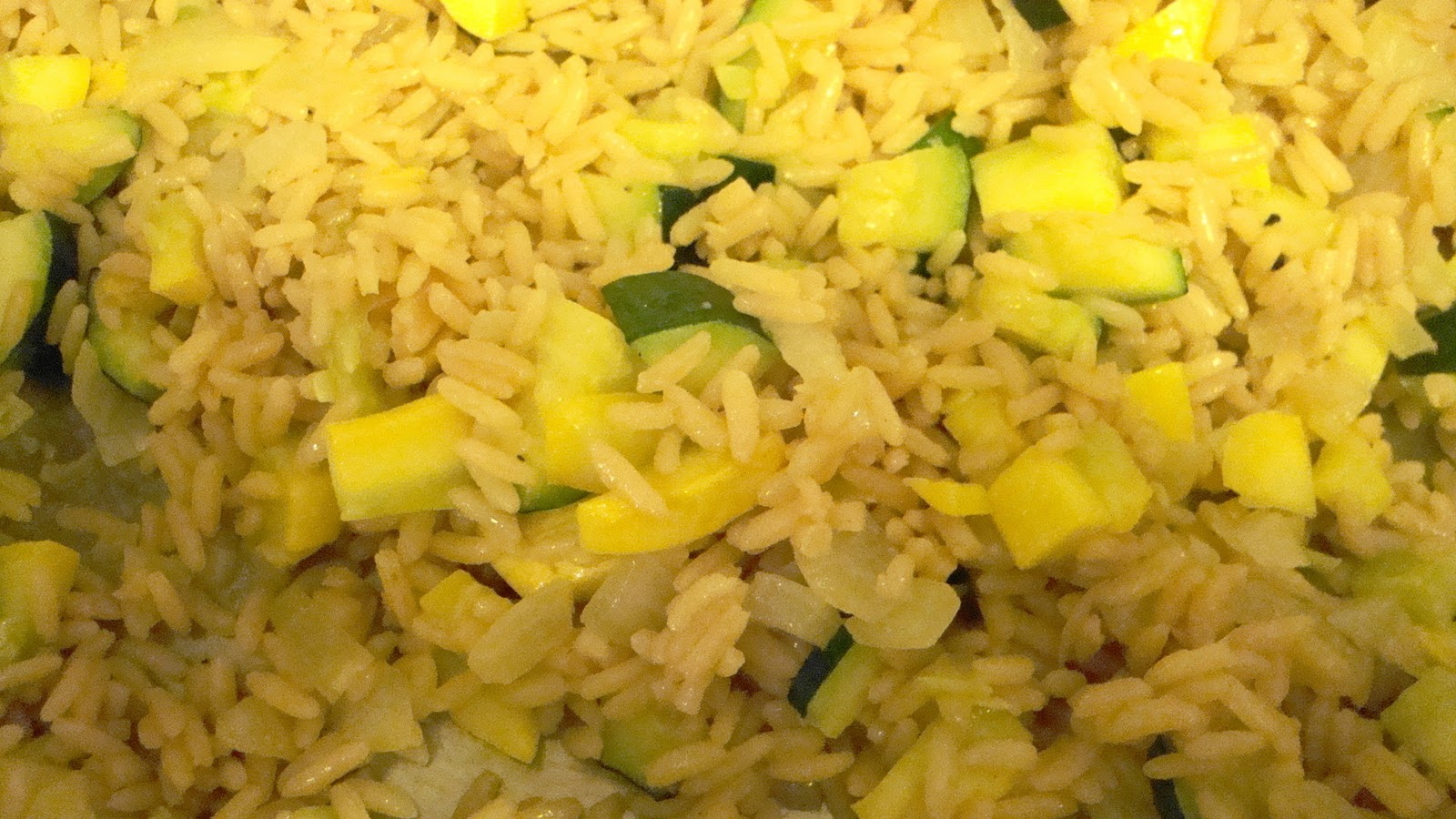
| Warm Rice Salad in process. |
![]() |
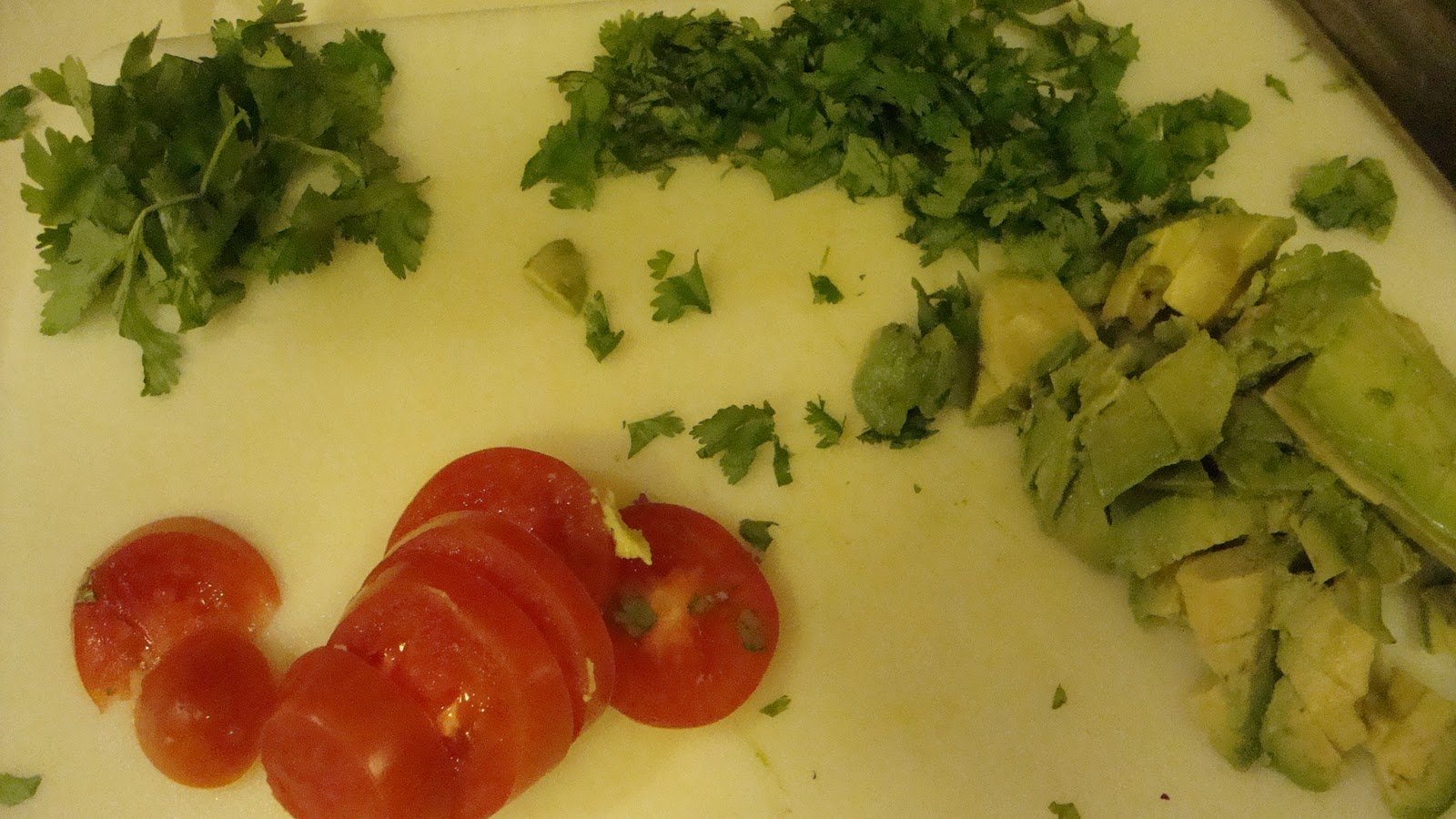
| Cilantro, tomatoes and avocado for the rice salad. |
![]() |
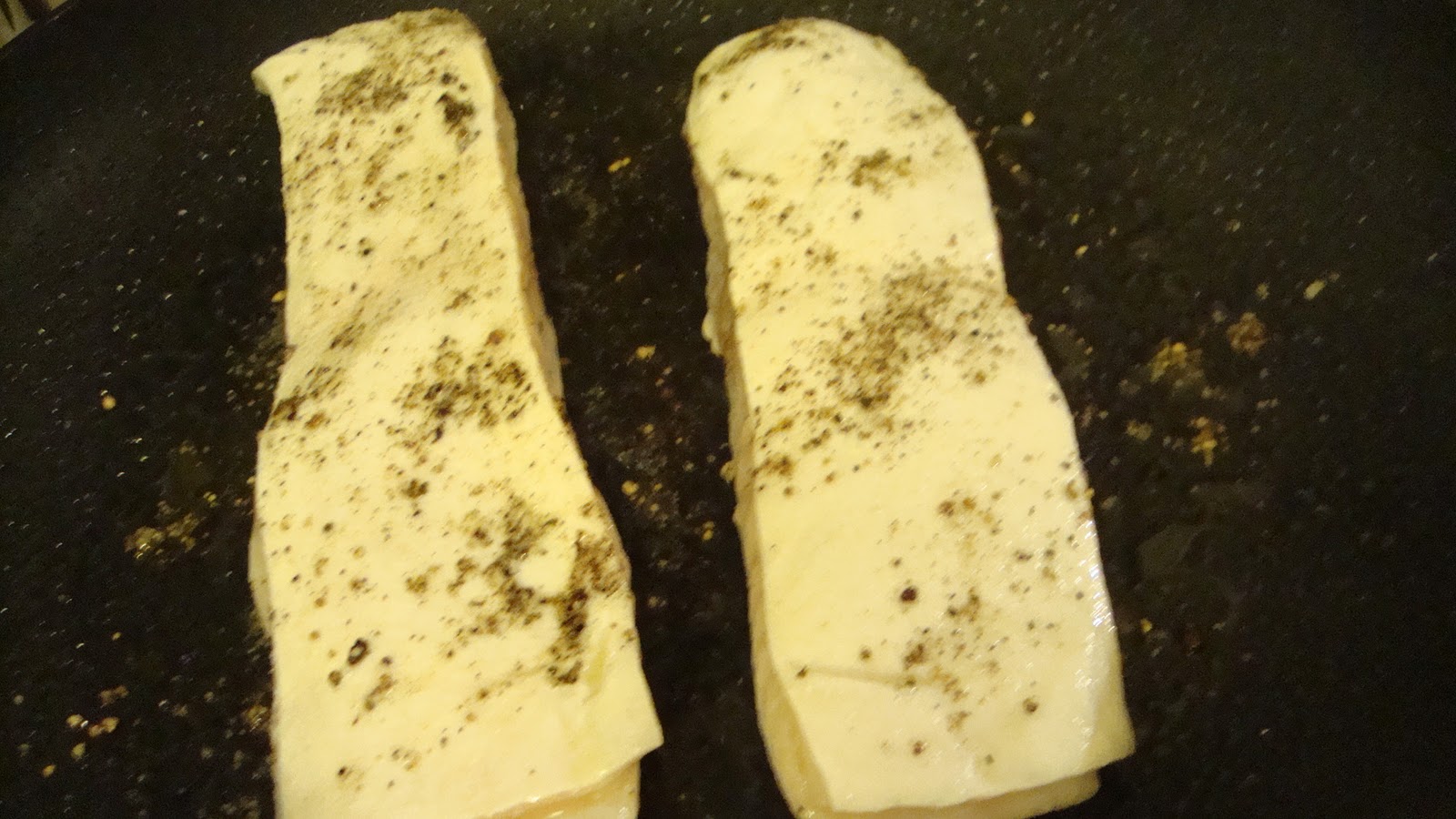
| When the halibut is cooked, pull it out and top with pico de gallo, thus warming the salsa. |
Be well in 2001 as you sing a new song,
Alyce
You’ll have to bear with me and read a while to get the recipe for this salad. Yum. It needs a better name. Be thinking as you scroll down.
What IS in a name? I’m pretty good with words–usually. But once in a while I’m just stuck for a name for a recipe I’ve developed. Once it was, “What do you call a Fish Taco Salad?” I had some great answers, but just thought “Fish Taco Salad” really told the tale. Same thing with the pinto bean rice tunzveg salad I made for tailgating last week.
Or, just for kicks, I threw in this photo (above) of the kid and the pumpkins. It’s October. I don’t know this kid’s name. I don’t remember where I got this picture. I’ve looked and looked. Who is this kid? What’s her/his? name? It matters; it really does. But I dunno. If you know, tell me.
Recipe names are important, too. They should say what the recipe is, but they should draw you in, too. Make you want to cook, as it were.
How about here? This is my Mom and my nephew Michael in the above pic. Many years ago. Mom’s been gone since 1985 and Michael’s in his 30’s, married with children. Mom; she was my mom. But she had a name. Even to my kids, she was our “Mom’s mom” or “grandma.” But she definitely was Faiery Elizabeth Denny McClendon. Born today in 1917. Happy Birthday, Fay. You’re my screensaver, Mom.
Here’s Michael today. With daughter Allison. Hmm. I wish they were here!
But then there’s this little punkin.
Aaron Noah Wilkerson.
Named for himself.
And his big brother, who’s no longer here, but is among the names God calls daily in heaven.
Nearly 9 pounds and 20 inches long. A solid chunk of humanity. So loved. So awaited. So beautiful.
They knew just what to call YOU!
Welcome to our world, Aaron. We’ll love having you here. When you’re bigger, you can eat some of this salad. That I’m unsure what to call. Maybe your Mom can help; she’s good with words, too. Good with making beautiful babies, too. Well, Dad helped. And everyone prayed. And prayed. I cannot wait to see you baptized!!
Still. This IS a food blog. Most of the time. So here’s my tailgating salad. Try it. Put different vegetables in it. Play with the seasonings. I found it needed citrus–acid and then a little sweetness–the butternut squash and the honey. This makes a LOT. And, maybe you can come up with a name. See this little bowl I used for photography? You’ll need a bigger bowl than that, I’d guess. We adored this.
Pinto Rice Salad with Cilantro-Lime Dressing or Here it is, Loren–you asked for it!!
12-14 servings
This was great with chicken enchiladas and sour cream. It’d be lovely with tacos–fish or meat. It is also an awesome vegetarian meal…leave out the cheese for vegans. Pretty nice for gluten-free folks, too. WhooHoo.
3 cups cooked pinto beans (do it yourself or use rinsed canned ones)
3 cups cooked white rice
1/2 c cabbage, finely sliced
1 c cubed (small) white cheddar cheese
2 small zucchini, diced **
1 small yellow squash, diced **
3 stalks celery, diced
1 c butternut squash, cooked, peeled and diced* (or use acorn squash)
1 avocado, barely ripe, diced
2 ears of corn, kernels cut off* (or 1 c frozen, defrosted corn)
1 bunch green onions, chopped (white and green)
1/2 bunch cilantro, chopped roughly
Dressing: Juice of 3 limes and 1/2 c olive oil, 2 cloves finely minced garlic, 1/2 t kosher salt, 1/2 t freshly ground pepper, 1/4 t ground cayenne pepper or to taste
Juices of 1/2 lemon, 1/2 lime, 1 orange; 2T honey
1 c cherry tomatoes, cut in half
In a very large bowl or 10 qt stockpot, mix the beans through cilantro gently. Pour 1/2 the dressing over all and mix again easily. Taste and adjust for seasonings. Squeeze over all the lemon, lime and orange juice. Drizzle honey over all. Mix again and taste for and adjust seasonings. Garnish with cherry tomatoes. (Don’t mix them in; they’ll mush up by the next day if you keep any of this that long.) Have the courage of your convictions and make this salad your own, changing up any of it. I really just made it up as I went along, after beginning with the idea of a bean-rice salad that felt and tasted very fresh.
Eat now or chill and serve within 1-2 days. Use remaining dressing at table or to moisten salad next day.
*Cook the corn and the squash in the microwave:
For the corn— Place whole ears of corn with husks and silks on dampened paper towel. Cook two ears about 4-5 minutes total. Remove ears from microwave and wrap in foil. Let steam for 5 minutes in foil and take off husks/silk. Cut kernels from corn by holding cob perpendicular to (and resting against) the cutting board. Slice downward, cutting between the kernels and the cob itself, moving around and turning the cob as each section falls to the board.
For the squash–Cut squash in half. Cook one half at a time. Place the squash in a 8″ square microwave-safe glass container and pour about 1/2″ water in the bottom. Cover and cook on high 5 minutes or so. Let sit another 5 minutes and remove squash from skin to dice on cutting board. Make your winter squash like this often and save lots of time.
**I sauteed the zucchini and the yellow squash for just a couple of minutes before adding it to the salad; you can leave it raw or cook it, even in the microwave, too–just as you like. Another option: throw in for the last couple of minutes with rice or beans.
Above: Winter Squash Fast, left, and my drained beans, right. Try cooking the beans in the microwave, too. They get done without getting mushy. I like them cooked up with lots of whole onions (peels, too) and a couple of cloves of garlic..as well as a whole jalapeno and lots of salt and whole peppercorns. You get a little heat without overwhelming the beans or the salad. Don’t forget to remove the peppercorns before eating!
Happy Fall, dear ones. Cook a pot of beans. Make some winter squash. Feel autumn come.
Sing a new song,
Alyce