38 Power Foods, Week 19 — Kiwi — Quick Individual Kiwi Tarts with Gingersnap Crust

An ultra thin ginger snap smothered with hot pastry cream serves as the “crust.”

How the Quick Kiwi Tart with Gingersnap Crust came to be…

While I love to bake a pie as much as the next woman (more than most, I’d guess), I also like nearly instant desserts that are luscious and don’t wear out the soles of your trainers.  (Like after you’ve cooked for company all day and still need dessert.)  I have a pocketful of favorites like a 30-second pumpkin custard (it’ll be in my soup book) and a blink-done  individual chocolate flourless “cake.” I also have no-bake favorites like a strawberry ice cream parfait layered with crumbled ginger shortbread and fresh peaches. In cases of real emergencies, I buy ice cream and cones–and not just for the kids.

But today I needed a kiwi something.  Not exactly in my bailiwick; I use kiwi in fruit salads or the occasional smoothie.  I kept picturing the industrial size, looks/tastes-like-Paris fruit tarts they sell at Marigold Bakery and Cafe in Colorado Springs.   The perfectly trained pastry chef turned out racks of these tarts daily–as well as many other pastries and breads.  You can’t count on him to spell your best friend’s name right on her birthday cake, but you can count on a piece of a tart at 3pm with your coffee or a full tart at 8pm for emergency company.  If you order ahead, you can get 12 for your son’s rehearsal dinner.  In other words, you can depend on that tart.  It’s topped with all the glories of many kinds of fruit.  But it’s not spring; it’s not summer.  Berries are over and I don’t need a BIG tart at all.  I need a T-tiny tart… (as my fine old friend Susan Gimarc would say)   Well, one for me and one for Dave.  Maybe two for tomorrow, though he usually gets all dessert leftovers.  But that’s it.  Enter the very petite and quick “Kiwi Tart with Ginger Snap Crust” made in a small ramekin.  The crust for each tart is one gingersnap at the bottom of a ramekin or small bowl.  Topped with hot pastry cream, the cookie doesn’t crumble, but softens into a beautiful crust made for a spoon.   Here’s how:

quick individual kiwi tarts with ginger snap crust   makes 4

Make a small pan of vanilla pastry cream (crème patissière, which is very like vanilla pudding). Recipe below.

Place one thin gingersnap in the bottom of each of four ramekins.
These are my favorite gingersnaps.  (Except for my own, of course)

Spoon hot pastry cream into ramekins.

If not serving right away, cover each tart with plastic wrap (pressing plastic down to cream) to prevent a skin from forming on the pastry cream.  Refrigerate for up to one day.  Otherwise, let cool a few minutes, and then go to next step:

Stand 3-4 slices of peeled kiwi in the cream. (Optional:  Heat 1 tablespoon apricot jam in microwave and brush kiwi with it.)  Serve immediately with extra ginger snaps if desired.

Ingredients List: 
3 kiwi fruit; each peeled and cut into four thin slices
4 thin gingersnaps, store-bought or homemade ( I like Anna‘s Ginger Thins.)
Pastry cream (below)
Optional:  1 tablespoon apricot jam
  
pastry cream recipe 
               from The New Basics Cookbook by Julee Rosso and Sheila Lukins*

  • 1 cup milk (whole or 2%)
  • 1/2 cup granulated sugar
  • 2 tablespoons cornstarch
  • 2 egg yolks
  • 1 tablespoon unsalted butter
  • 1/8 teaspoon salt
  • 1/2 teaspoon vanilla extract**

In a heavy saucepan, combine milk, sugar, cornstarch, and egg yolks. Place over low heat and, whisking, bring to a boil.  Cook another minute and remove from heat.  Stir in butter, salt, and vanilla extract.

*There are many pastry cream recipes, but a lot of them make a large amount of pastry cream and many more use a larger amount of egg yolks.  Use whichever you like best. This one has a very simple and streamlined process, is tasty, and makes just enough for these four tarts.  You could also, of course, use a low-fat, light pudding or custard recipe if needed.  Difference between pastry cream and vanilla pudding?  I can’t tell much, though sometimes vanilla pudding doesn’t have eggs.  The difference, however, between pastry cream and custard is that custard is 1.  thickened only with eggs (no cornstarch or flour) and is 2. cooked in a water bath (bain marie) in the oven, while pastry cream or vanilla pudding is a stove top process.

**You can also flavor pastry cream with a little brandy or Grand Marnier–try 1/2 teaspoon first and add a second 1/2 if needed.

about those kiwi

Calories:  108 calories per cup of kiwi

Kiwifruit is one of nature’s perfect foods: low in calories, high in energy and an excellent source of antioxidants. Each one delivers a world of nutrition benefits, including:

  • Vitamin C: Each serving of kiwifruit has nearly two-and-a-half times the recommended daily allowance of vitamin C, proven to boost the immune system and fight the effects of stress and aging.
  • No fat: Kiwifruit is fat-free, an important consideration in today’s healthy diets and a rarity among foods containing so many other nutritional benefits.
  • Fiber: Two kiwifruit contain more fiber than a bowl of bran cereal, the tasty way to maintain heart health, regular digestion and lower cholesterol.
  • Potassium: A serving of California Kiwifruit has more potassium than a banana, ideal for maintaining fluid and electrolyte balance and for releasing energy during exercise.
  • Antioxidants: Kiwifruit is an excellent source of antioxidants which are important in reducing your risk of cancer, heart disease and stroke.
  • Low glycemic index: With a glycemic index of 52, kiwifruit is a fat-free, low-carb fruit that’s safe for diabetics and a smart part of any weight-loss diet.
  • Magnesium: Two kiwifruit deliver 30 mg of magnesium, which improves nerve and muscle function while boosting your energy level.
  • Lutein: Kiwifruit contains the phytochemical lutein, which works to prevent age-related blindness and protect eyes from various kinds of damage.
  • Folate: With nearly 10% of the recommended daily value of folate, kiwifruit is a good way to protect the health of mother and baby during pregnancy while helping prevent birth defects.
  • Zinc: Men will appreciate kiwifruit’s zinc content, which helps produce testosterone, while everyone can enjoy its other benefits like healthy hair, skin, teeth and nails.

Vitamin E: Kiwifruit is one just a handful of fat-free sources of vitamin E, a powerful antioxidant that helps lower cholesterol and boost immunity. (Info and photo:  Courtesy California Kiwifruit Commission)  

^^^^^^^^^^^^^^^^^^^^^^^^^^^^^^^^^^^^^^^^^^^^^^^^^^^^    

Join our blogging group!

 Today I’m baking oatmeal chocolate chips for the reception after the Historic Organ Recital at Prospect Park United Methodist (where I work as a choir director).  It’s 7:30 tonight, Friday, October 19.  See you there.  A favorite activity, I did it last week, too…

  •   a blog repeat, but fun:
    Saturday, I baked oatmeal chocolate chips for the authors in town for Opus and Olives, one of the premiere literary events in the Twin Cities held each fall  at the Crown Plaza Hotel in St. Paul. (Mark Shriver said he’d eaten his six all in a row; he’d had no food in hours while traveling!)  Dave and I also went the banquet and enjoyed a fine meal with great folks while we listened to the each author speak.  (My favorite was Cheryl Strayed, but then again, I adored her book Wild: From Lost to Found on the Pacific Crest Trail.)

    Happy Tuck

    I also meet today for lunch with a wonderful editor/writer who I hope will be doing some editing on the book, 30 Soups in 30 Minutes.  This week– test on turnip soup (lovely–no details given away here) and lots of work in Microsoft Word, which isn’t nearly so fun as drumming up new soups in my kitchen.  Not sure we’ll be done with this little ditty by Christmas, but who knows?

    Sing a new song,
    Alyce

    38 Power Foods, Week 18 — Citrus — Step-by-Step Pear or Apple Crostata (Pie 101)

    Scroll down for recipe.

    Come fall, I make crostatas regularly.  They’re beautiful, terribly good to eat, and generally make folks quite happy.  A free-form fruit pie (often made with homemade jam in Italy), they’re easier to make than traditional American pie and are show-stoppers when you have friends to dinner.  I’ve blogged the crostatas before, and have taught them several times for the Italian classes I’ve done at home.  But I didn’t think of them in terms of citrus until our Power Foods list came up this week.  While citrus (lemon particularly) is a huge part of my cooking, I think about it less in terms of baking.   

      For instance:  I rarely make a green salad without squeezing a lemon over it.  Either I have lemon and oil, lemon alone, or lemon before a vinaigrette.  Whatever choice I make, lemon, as an acid, is always followed by salt and pepper on my salads because salt dissolves best in acid.  For that reason, if I’m making a vinaigrette, I always put the salt in the acid — whether citrus or vinegar– before adding the oil. 


      Secondly, there’s little to perk up a piece of chicken, a steak, or a lamb chop like a squeeze of fresh lemon.  Of course you like lemon on fish, right?  Why not red meat or poultry?

    Another thing: I love lemon juice in chili.  I stuff my roasting chicken with big pieces of orange and a cut-up onion or sometimes roast a lemon in the bottom of the pan for the sauce.  I use one citrus or another to keep my cut fruit from browning.  There are so many ways I use citrus, I can’t count or write them.  I buy lemons by the bagful, but rarely go to the store without also buying limes.  Because I don’t eat oranges or grapefruit for breakfast, I buy those only when I’m cooking or baking with them.

    These fresh fruit fall crostatas, too, would be very much less without the citrus.  I make several kinds of crostatas, but these two, apple and pear, have orange and lemon zest respectively.  You could switch them out and use orange with the pear and lemon with the apple; I’m sure it would be lovely.

    Citrus is, of course, loaded with vitamin C,  provides fiber, folate, lycopene, potassium and other vitamins and minerals.   (More below.)  Yes, it’s great food…  But for me…it’s all about the flavor when I use it for cooking.

    A picture story…followed by the recipe.  Bake peace!
                            (Interested in traditional pie?  Read my PIE 101 post here.)

    First, the apple version:

    Option a (below) for moving pastry from board/counter to the baking sheet

    Apple close-up–ready to eat!

     
    Option b (below) for moving pastry from board/counter to baking sheet

    And, then the pear photos:


    Baked pear crostata close-up; I liked the pear best.
    The pastry recipe for this comes from Ina Garten, who, I am pretty sure got it from  Joanne Killeen and George Germon in CUCINA SIMPATICA; ROBUST TRATTORIA COOKING and maybe a few other places!  Just a little detective work of mine.  Despite the provenance, it’s a tasty tidbit for fall when the fall fruit is divine   As neither one of them made pear, I feel I’ve contributed to the development of the recipe and hopefully to the happiness of your tummies.  This is tres easy, and if you’re afraid of pastry, this is a great start.  There’s no form-fitting into pie pans or making a crust look “P” for perfect.  This is a free-form, rustic pie baked on parchment paper on a baking sheet.  If it spills over or runs through, it’s just crusty-gooey and even better.  Don’t hesitate.  Pretty for Thanksgiving, too.  Oh, in France, this is a galette.
     
     Here’s how I did it:
    Here is the apple at left and the pear at right.


    LEMON SCENTED PEAR-ALMOND CROSTATA
    4 large or 6 regular servings for each crostata
    Parchment paper needed for baking
    pastry:  (makes 2-freeze one for later or make 2)
    • 2 c white, unbleached flour
    • 1/4 c granulated sugar
    • 1/2 t kosher salt
    • 1/2# (2 sticks) very cold, unsalted butter, cut into pieces
    • 1/4 c ice water

    In the food processor, fitted with the knife blade, pulse together the flour, sugar and salt.  Add the cold butter and pulse until mixture is the size of peas.  Slowly add iced water through the feed tube until dough begins to come together. 

    Remove carefully from processor and divide in half.  Press each into a disc.  Wrap one in foil and freeze it.  Refrigerate the other for an hour is best, but you can roll it right away if you must.  Dust the counter very well indeed with flour and roll the disc, using a rolling pin, into an 11″ circle. 

    Place on parchment lined baking sheet until you have the fruit ready.  (Check out the pics above where I give you two options for getting the pastry from the counter to the pans.)  You can  a. fold it up gently and  quick like a bunny pick it up, and centering it over the baking sheet, place it carefully down and unfold it or, b. loosely roll the dough back onto the rolling pin and move the rolling pin over above the baking sheet, lowering it and loosening the pastry down flat onto the pan.   

    This is not easy to describe; I apologize for lack of prowess as a technical writer!

    Filling
    1-11/4# pears (Seckel or Bosc or a mixture), peeled, cored and cut into 1″ chunks
    1-2t grated lemon rind
    1/4 c sliced almonds
    1/4 c ea flour and sugar
    1/4 t kosher salt
    1/4 t cinnamon
    4T unsalted butter
    Preheat oven to 450 and place rack at center.

    In a large bowl, mix cut-up pears with lemon rind and most of the almonds, reserving 1T or so for the top of the crostata.
     In the food processor, make a crumb topping for the crostata by pulsing together the flour, sugar, salt, cinnamon and butter until crumbly.  Remove the blade from the processor bowl, and, using fingers, pinch together the crumbs until they hold together.  
    Place pear-lemon mixture onto the pastry, leaving 1 1/2 inches around the edges.  Crumble topping on the pears evenly and sprinkle with the last of the almonds.  Fold the edges of the pastry up and over the fruit, gently pleating the dough at the corners.  You’ll be leaving most of the fruit covered by only the crumbly topping; the pastry just comes up around the edges of this pie.
    Place baking sheet in oven and bake 25-30 minutes (use the longer time above 5,000 feet) until golden brown and crispy.  Remove from oven and let sit for 5 minutes before sliding pie off the paper onto wire rack to cool completely.
    Will hold at room temperature a day or so and in the refrigerator for several days, though it is best fresh.
    Note:  If you’d like to make an apple crostata with the other crust, it’s made almost like the above pie, but you’ll need 1 1/2 # (3-4 large Granny Smith) apples, 1 t orange peel and no nuts unless you choose to add some one your own.  If you do, toasted walnuts might be best.  This is Ina’s method!
    ^^^^^^^^^^^^^^^^^^^^^^^^^^^^^^^^^^^^^^^^^^^^^^
    More info on citrus nutrition HERE.
    ^^^^^^^^^^^^^^^^^^^^^^^^^^^^^^^^^^^^^^^^^^^^^^^^^^^^^^^^

    I blog with a great group of writers every Friday where we cook our way through the list of foods from Whole Living Magazine’s Power Foods:  150 Delicious Recipes with the 38 Healthiest Ingredients:    Read more about tasty citrus this week at these sites: 

     
    Ansh – SpiceRoots.com  
    Minnie Gupta from TheLady8Home.com

    Sarah – Everything in the Kitchen Sink
    .
    Want to join us?  We’d like to have you as part of the group.  Get in touch with Mireya from My Healthy Eating Habits:  Mireya@MyHealthyEatingHabits.com

    Sing a new song,
    Alyce

    38 Power Foods, Week 17 — Berries — Fresh Berry Cake

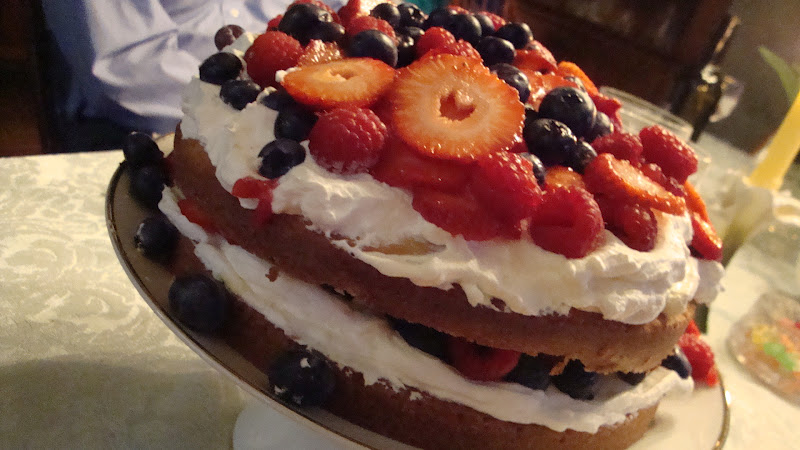
    Just looking at this cake will tell you that it’s not difficult to make and it’s NOT.  A quick glance at the recipe, however, might put you off.  Don’t let it.  There may be a little reading involved, but the cooking and baking are fairly simple and don’t take long.  In fact, though it’s two layers, you only bake one cake.  After it’s cool, you cut it in half.

    But listen, if you’re not a baker, this is just the cake for you… because you can get away without baking a cake at all!  Just buy a Sara Lee pound cake and cut it into layers–maybe three?–and do a loaf-shaped cake on a pretty rectangular tray.  Follow the rest of the directions for the berries and filling and there you are!   You could also bake a box cake into cupcakes, slice them, put half in a pretty coffee cup and decorate from there.  Whatever you do, this is a beautiful, tasty cake for Easter, Mother’s Day, or the Memorial Day picnic.  (Assemble this cake where you’re serving it.)  If you don’t have a special cake plate, don’t worry about it.  Whoever eats this will be happy no matter what.  Next time you run in Good Will, see a funky antique shop or a garage sale,  keep an eye our for great serving pieces.  No need to spend a fortune at the department stores. 

    Another idea comes from my mother-in-law, who, when I was  a young wife, often made a similar cake using a homemade or store bought angel food cake.  To cut calories, she used Cool Whip, but I can’t go that far.   If I’m eating cake I want to eat cake.  Let them eat cake!  But if you really must cut the whipped cream for health or allergy reasons, try the Cool Whip version.
    Cook’s Note:  While October isn’t prime berry time (there are still a few blueberries coming from upper Michigan and Canada), I made this earlier in the year and knew it would be perfect for the Power Foods Berry Post.  Save the recipe for next spring if you’d like to try it with all fresh berries.
    I made this for Mother’s Day and took it to a friend’s.  We all had a tiny slice with a huge cup of coffee. 

     Easy Berry Butter Cake (Aida Mollenkamp–courtesy Food Network)

    Difficulty: Easy | Total Time: 1 hr 5 mins, plus cooling time | Active Time: 25 mins | Makes:8 to 10 servings

    • For the cake:*

    • 1 1/2 cups all-purpose flour, plus more for coating the pan

    • 3/4 teaspoon baking powder

    • 1/4 plus 1/8 teaspoon fine salt

    • 8 tablespoons unsalted butter (1 stick), softened, plus more for coating the pan

    • 1 cup granulated sugar

    • 2 large eggs, at room temperature

    • 1/2 cup whole milk

    *Or use a purchased cake like Sara Lee Pound Cake

    • For the filling:

    • 1/2 cup mascarpone cheese, at room temperature

    • 1 cup heavy cream

    • 1 tablespoon granulated sugar

    • 1/2 teaspoon almond extract

      To assemble:

      • 1 1/2 pounds mixed berries*, washed (if you’re using *strawberries, they’ll also need to be hulled and quartered)  You might not need quite this many berries; mine didn’t fit on the cake. 
      •  
      INSTRUCTIONS
      For the cake:
      1. Heat the oven to 350°F and arrange a rack in the middle. Coat an 8-inch round cake pan with butter and flour, tap out the excess flour, and set the pan aside. Combine measured flour, baking powder, and salt in a medium bowl and whisk until evenly combined; set aside.
      2. Place measured butter in the bowl of a stand mixer fitted with a paddle attachment and beat on medium high until light in color and fluffy, about 3 to 5 minutes. Add sugar and continue to beat on medium high until white in color and the texture of wet sand, about 3 minutes more.
      3. Add eggs one at a time, letting each incorporate fully before adding the next. Stop the mixer and scrape down the sides of the bowl with a rubber spatula. With the mixer on low, add half of the flour mixture. Mix just until incorporated, then add milk and continue mixing until smooth. Add the rest of the flour mixture, mixing just until incorporated, about 2 minutes more.
      1. Scrape the batter into the prepared cake pan. Bake until a cake tester inserted into the center comes out clean, about 40 minutes. Transfer to a wire rack to cool, about 15 minutes. Run a knife around the perimeter of the cake and turn out onto the rack, right side up, to cool completely. Meanwhile, make the filling.
      For the filling:
      Place mascarpone in the bowl of a stand mixer fitted with a whisk attachment and whip on medium speed until smooth, about 1 minute. Add cream, sugar, and almond extract, increase speed to medium high, and whip until ingredients are combined and firm peaks form, about 15 seconds more. Cover and refrigerate until ready to use.
      To assemble: *

      1. Slice cake in half horizontally using a serrated knife. Divide filling evenly between the cut side and the top of the cake. Divide berries evenly over the filling. Stack cakes on top of each other and serve.


      If using a purchased cake like frozen Sara Lee pound cake, you might want to slice it (into thirds, perhaps) while it’s still partially frozen.  (Recipe first posted in May of 2012)
       

      Note:  I’ll share with you that whenever I’ve made a recipe by Aida Mollenkamp, it’s been incredible.  I don’t see her on Food Network anymore; is she still on?  But she does have a lot of recipes.  One that immediately comes to mind is her lasagna. Can’t make that very often.
       

       I like berries because of all the things they can do for us…provide tons of vitamins, fiber, antioxidants,  memory ability boosters, and more…  But I also love them because they’re gorgeous, inexpensive (relatively),  taste incredibly good, and are low in calories.  Many of them are also easy to grow at home.  And while we’re out of berry season in most places in the country, I just got a couple of pints of Michigan blueberries much like the tiny wild Maine berries that are often lusciously sweet-tart and make such great pancakes and muffins.  For more on berries and why we should eat them, click here. 
        ^^^^^^^^^^^^^^^^^^^^^^^^^^^^^^^^^^^^^
       I blog with a great group of writers every Friday where we cook our way through the list of foods from Whole Living Magazine’s Power Foods:  150 Delicious Recipes with the 38 Healthiest Ingredients:    Read more about beautiful berries this week at these sites: 
      Ansh – SpiceRoots.com  
      Minnie Gupta from TheLady8Home.com

      Sarah – Everything in the Kitchen Sink
      .
      Want to join us?  We’d like to have you as part of the group.  Get in touch with Mireya from My Healthy Eating Habits:  Mireya@MyHealthyEatingHabits.com


      ^^^^^^^^^^^^^^^^^^^^^^^^^^^^^^^^^^^^^^^^
      Need some fall love?
      Try reading this week on my Dinner Place blog (Cooking for One):
      Sing a new song,
      Alyce
      P.S.  Fellow blogger @donteatalone.blogspot.com,  Milton Brasher-Cunningham, has just published a book you might be interested in:
      Check it out!


    38 Power Foods, Week 16 — Apricots– Coffee Cup Apple Cobbler with Apricots, Dates, and Walnuts

    Just add ice cream

    Gently put:  I’m so very, very thrilled to be able to bake.  Anything.  To leave a burner on for soup.  Any kind.  Blessed fall, I welcome you with a full slate of cooking I’ve been dying to do for a month.

    My husband started wandering around a few weeks go saying things like:

    Are there any cookies?  Any at all anywhere?

    What he meant was Any chance there are any Christmas cookies left in the big freezer?  Because I don’t bake in the summer.  Not unless there’s a birthday and I get up very early to do it.  He was then snarfing around to see if I’d laid back any shortbread; I keep packaged Scots shortbread to crumble in ice cream parfaits.  Finally I just had to bake.  He couldn’t go another day. (There were no Christmas or any other kind of cookies in the big freezer in the garage.)

    And once the baking gets going in the fall, it includes all things apple.  And since it was time for apple cobbler, I thought I’d make a new one that included a few other things.  The resulting cobbler was worthy of fall.  A few toasted walnuts…some dried figs…and of course, today’s treat:  apricots.  (In this case dried apricots.)   I had fun baking them in individual coffee cups (French porcelain by Apilco–oven-safe) and, naturally, topping them with a little vanilla ice cream.  Try this:

    coffee cup apple cobbler with apricots, dates, 
        and walnuts
    makes 6 or 7, depending on the size of your cups  (If you use ramekins, it will make more.) 

    Preheat oven to 425 degrees Fahrenheit.

    For the filling:

    • 5 Granny Smith apples, peeled, cored, and thinly sliced
    • 1/4 cup chopped, toasted walnuts
    • 1/4 cup each chopped dried figs and apricots
    • 1/2 cup white sugar
    • 1 teaspoon cinnamon
    • 1/4 teaspoon each:  ground ginger and nutmeg
    • 1/8 teaspoon ground cloves
    •  4 tablespoons butter, cut into small pieces

    Mix together all of the ingredients except the butter in a medium bowl.  Divide the mixture evenly between greased cups while you make the biscuit topping.  Dot each cup of fruit mixture with butter.

    For the biscuit topping:

    •  1 cup unbleached flour
    • 2 tablespoons of white sugar
    • 1/4 teaspoon salt
    • 2 teaspoons baking powder
    • 4 tablespoons (1/2 stick or 1/4 cup) butter, chilled
    • 6 tablespoons milk

    Combine the flour, sugar, salt, and baking powder in a bowl or in the food processor fitted with the steel blade.  Stir together with a fork or by pulsing the machine.  Cut the butter into bits and using a either a pastry blender, two knives, your fingers or by pulsing the machine, work it into the flour mixture until it resembles fine crumbs.  Slowly add the milk, stirring constantly  with a fork or by leaving machine running.  Gather the dough together on a floured board and knead ten times.  Roll or pat dough until it’s no more than 1/2 inch thick.  Cut dough in circles (size of the top of the cup diameter) and top each cup of fruit mixture with dough.

    • 1 tablespoon melted butter

    • Vanilla (or cinnamon)  ice cream for serving

    Brush the top of each circle of dough with a little melted butter.  Place cups on a rimmed baking sheet.  Bake for 20-30 minutes until bubbly and golden brown.  Let cool 20 minutes or more before serving warm or at room temperature with vanilla or cinnamon ice cream.  Store leftovers tightly covered in the refrigerator for 2-3 days.

    Cook’s Note:

     If you want to bake this in one pan, it’ll be fine. Use a greased 8×8 square baking pan and roll the dough out to fit inside that pan.

    Biscuit topping recipe courtesy  THE FANNY FARMER BAKING BOOK by Marion Cunningham.

     About those dried apricots:

    Calories

    A serving of this fruit supplies about 67 calories, but keep in mind that this is for 1/4 cup. Be sure to portion the fruit instead of eating straight from the bag or carton to prevent overeating.

    Carbohydrates

    The bulk of the calories in dried apricots is from sugar. Of the 17.5 g of total carbohydrates, 15 g are from the natural fruit sugar, providing 90 percent of the calories. A serving of dried apricots provides about 2 g of fiber, or about 8 percent of the daily value.

    Protein and Fat

    A serving of fruit provides about 1 g of protein and trace fat. It can be tempting to eat more than one serving at a time because of the low fat content, but remember to keep an eye on total calories.

    Vitamins and Minerals

    Dried apricots provide small amounts of calcium, iron, magnesium, phosphorus and potassium. They provide about 1,171 IU of vitamin A and 1.4 mg of vitamin E. There are only 3 mg of sodium per serving, making dried apricots a low-sodium food and a good choice for those with high blood pressure.

     Nutritional information for fresh apricots available here.

    Read all about apricots  here at the California Apricot site.
     
    Want more apricot recipes?  Check out 21 of Martha Stewart’s favorites.

    If you liked this recipe, you might like my Low-Fat Granola, which includes yummy dried apricots:

    or my Czech Easter Bread, which should have citron, but has apricots instead!

    ^^^^^^^^^^^^^^^^^^^
    I blog with a great group of food writers on Fridays as we cook our way through the list of foods from Whole Living Magazine’s Power Foods:  150 Delicious Recipes with the 38 Healthiest Ingredients:    Read more about beautiful apricots this week at these sites:
     

    Alanna –  http://kitchen-parade-veggieventure.blogspot.com/

    Ansh – SpiceRoots.com  
    Minnie Gupta from TheLady8Home.com

    Sarah – Everything in the Kitchen Sink
    .
    Join us!  We’d like to have you as part of the group:

    To become involved with our blogging team,  get in touch with Mireya from My Healthy Eating Habits:  Mireya@MyHealthyEatingHabits.com

    ^^^^^^^^^^^^^^^^^^^^^^^^^^^^^^^^^^^^^^^^^^^^^^^^^^^^^^^^^^^^^^^^^^^^^^^^
    30 Soups in 30 Minutes…(new book) Update


    Testing Two Mushroom-Red Onion with Cheddar and
    Cream of Spicy Pumpkin this week.  Good thing we like soup.
    The pumpkin was done in twenty minutes.  Don’t buy
    cartons of soup if you can make soup this quickly and
    know exactly what’s floating around in your bowl.

    ^^^^^^^^^^^^^^^^^^^^^^^^^^^^^^^^^^^^^^^^^^^^^^^^^^^^^^^^^^^^^
    two-dog kitchen and around the ‘hood: 

    The squirrels are so nutty right now ( good pun)…The dogs and I counted seven right in front of us on our walk the other day.  Up trees, across roads…yes, I’ll go this way/no I’ll go that way.  They’re crazy!

    Photo: Is it just me or are the squirrels a little nutty (squirrely??) right now?   Cross the road; don't cross the road.   Oops!  I changed my mind again.  Up the tree; down the tree.  Chase six of my brothers and sisters at the same time. Chaaaaatttter, chaaaateerrr....  Sit right there and don't move despite the fact that two big dogs are right on top of ya, fella.


    We are screaming for rain…it’s so dry lots  of things are just browning up and dusting away instead of turning their fragrant-vibrant reds and golds.  I’m trying to plant a few things for next spring and I’m afraid it’s useless.  The grass is..  Well, the grass is just not good.  


    Nothing in the forecast.
    Just for fun (tea spoon for scale)  Brussels Sprouts from Trader Joe’s today
    Apfel Pfannkuchen (apple pancake) on the Dinner Place/Solo Cook blog right now.

    Sing a new song; bake a new anything!
    Alyce
     

    38 Power Foods, Week 15 — Winter Squash — Israeli Couscous-Butternut Squash Salad with Fall Fruit, Cheese and Orange Vinaigrette

    How are new salads born at my house?    Like this……

    I’ve had some Israeli couscous (actually a blend) in my cabinet for a few months.  Waiting.
    Typically I throw some leeks, garlic, and asparagus in a sauté pan come spring and throw those lovely things into a bowl of couscous or orzo with a handful of grated Parmesan and lots of black pepper.

    When I realized this was the week to blog winter squash, a different group of ingredients started to percolate.  Despite the summer tomatoes still coming on (albeit slowly) and the basil crying for that last bowl of pesto to be made, I kept thinking fall food once the squash got in my head.  Cranberries, apples, pears, sharp cheese, nuts.

    Fall..I adore pears…here I’ve just poached them slowly in port with some orange peel and cinnamon sticks.

    Thursday I had a big pot of turkey chili on the stove and called some friends to run over and help eat it.  This salad, which began in my head days before it ended up in our stomachs,  started the meal.  I cooked the couscous and started chopping fruit and toasting nuts.  It came together that easily; it’s fairly fast, too.  I did think I might have liked walnut oil for the vinaigrette, but the only can I had was in the frig at our Colorado house where it’ll stay a bit fresher over the time we’re not there.

    Could it be a whole meal?  Definitely.  Since it has oranges to keep the fresh fruit from turning brown, I think it’ll keep a day or so…but no more.  It might be a filling and happy side for a quick Thanksgiving meal:  roast a turkey breast, make this salad, and cook some of those green beans you’ve been freezing.  Anyway, here’s how:

    Follow the photo-easy recipe:

    Cook 8 ounces of  Israeli Couscous*  according to package directions. Use chicken broth in place of water. You can add a few leaves of fresh sage if you have them (remove before making salad).  When couscous is tender, add 1 1/2 tablespoons canola oil and 1 1/2 tablespoons olive oil while still hot.  Sprinkle with 1/4 teaspoon each kosher salt and fresh ground white pepper.  Optional:  Stir in 1/4 teaspoon crushed red pepper. Cool to room temperature.
    Toast 1/4 cup pecans in a dry small skillet and chop, reserving a few whole nuts for garnish.
    Dice (medium) 1 pear, 1 apple, 1 orange (peeled),  6 dried figs (or fresh), 1 small cooked butternut squash (see below for my microwave directions).  Dice (small):  2 oz. each sharp cheddar and Swiss cheese like Jarlsberg or Emmental or even Gruyere.
    Mix fruit, squash,  cheese, 1/4 cup dried cranberries, and pecans with cooled couscous.  Add the juice of another orange and 1 teaspoon honey.  Stir well, taste and adjust seasonings and/or dressing.  Serve in a bowl lined with fresh spinach leaves and garnish with reserved whole pecans.

     6 servings

    We liked this salad with coffee cup pumpkin-chocolate chip muffins.

    *I used Harvest Grains Blend from Trader Joe’s (available on amazon.com as well), which is a “savory blend of Israeli Couscous, Orzo, Baby Garbanzo beans, and Red Quinoa.”  Regular Israeli or pearl couscous is fine and orzo or even farro would be easily workable substitutes.

    Ingredients list:  8oz Israeli couscous or blend, salt, pepper, crushed red pepper (optional), fresh sage leaves (optional), 1 3/4 cups chicken broth (used 1 15 oz. can plus a little water), 1 1/2 tablespoons each canola and extra virgin olive oil, 1/4 cup pecans,  1 small butternut squash, 1 pear, 1 apple, 2 oranges (1 in salad, 1 juiced), 6 figs (fresh or dried), 1/4 cup dried cranberries, 2 ounces each sharp cheddar  and Swiss cheeses, 1 teaspoon honey, 2 cups fresh spinach leaves

    ^^^^^^^^^^^^^^

    HOW TO COOK BUTTERNUT SQUASH IN THE MICROWAVE:

       Place squash in a large microwave-safe dish and, using a sharp thin knife, poke a few holes in the largest section for escaping steam.  Microwave on high 3-5 minutes (depending on size of the squash–a 1.5lb squash might take 5 minutes, for example) and remove the squash to a cutting board.   Using a large chef’s knife, carefully cut the squash in half horizontally and  with a large spoon, scoop out seeds and strings.   Place the two halves back in the baking dish with a little (2 tablespoons or so) water and put the dish back in the microwave.  Cook another five minutes on high or so (depending on the size of the squash) until tender. Covering the squash with plastic wrap or a microwave-safe cover will decrease the cooking time.   I have also filled the center section with butter and a little brown sugar and served it just like that. (I often do this with acorn squash for a quick hot lunch.)  Otherwise, you can let the squash cool, and then peel and chop or mash it according to your needs.  This is much easier than peeling (or cutting) raw butternut squash, which is, at best, difficult.
    ^^^^^^^^^^^^^

    I cook winter squash frequently and my reasons are many.  Here are a few:

    1.  It’s delicious; it’s good for your body.
    2.  It’s easy to prepare in several ways: Stick in oven, saute, braise, boil, or microwave.
    3.  It’s useful as a vegetable or side, but is also hearty enough for a main dish. (Stuff with cumin rice, jack cheese and scrambled eggs for breakfast!)
    4.  It’s an excellent addition to soups and stews.
    5.  It’s a good substitute for potatoes with pot roast or roasted chicken.
    6.  It’s inexpensive and easy to find nearly year round, but particularly now.
    7.  It keeps on the counter for a long time–easily 2 months. (That’s about the limit for acorn; the others can keep much longer.)

    Be brave and try whatever beautiful squash you find at the market.  Whatever you do with acorn squash, you can easily do with most of the others.  Even spaghetti squash is quickly cooked in the microwave.  Shred it with a fork, add a little butter (salt/pepper) and you have a beautiful meal.  And, yes, you can add marinara and stay on South Beach, phase 2!!

    Don’t want to deal with the peel?  You can buy peeled and cubed butternut squash or pumpkin at some markets, but you will pay a premium price.

    Nutrition Profile for Butternut Squash

    Each cup of cubed butternut squash provides approximately 60 calories, 16 g of carbohydrates and 3 g of fiber. It also supplies almost 300 percent of your daily value of vitamin A, 50 percent of vitamin C, 7 percent of calcium and 5 percent of iron.

     Want more info on winter squash, including nutrition and recipes?  Visit the Snap-Ed (USDA) site here.

    ^^^^^^^^^^^^^

    If you liked this, you might also like this recipe from my Dinner Place blog.

    rosemary chicken thighs with butternut squash, onions, and fennel

    Throw it all together with olive oil; slip it into the oven on a big rimmed baking sheet.  Dinner emerges in about 35 minutes!

    or you might like this:

    roasted orange chicken and butternut squash (meal in a pan)

    or my butternut and other squash soup

    This is a lovely soup for someone who is not well or can’t chew, but is luscious as well for a first course at Thanksiving.

     ^^^^^^^^^^^^^^^^^^^^^^

    I blog with a great group of food writers on Fridays as we cook our way through the list of foods from Whole Living Magazine’s Power Foods:  150 Delicious Recipes with the 38 Healthiest Ingredients:    Read more about beautiful winter squash this week at these sites:


    Alanna –  http://kitchen-parade-veggieventure.blogspot.com/

    Minnie Gupta from TheLady8Home.com

    Sarah – Everything in the Kitchen Sink
    .
    Join us:

    If you’re interested in joining the gang writing each week, get in touch with Mireya from My Healthy Eating Habits:  Mireya@MyHealthyEatingHabits.com

    Sing a new song and cook a new squash,
    Alyce 

    38 Power Foods, Week 14 — Tomatoes — Photos from my Tomato Gallery

    Julia’s 100th Birthday post:  Salmon Fillet en Papillote with Spinach and Tomatoes
    Just for fun this time, I thought I’d share some of my favorite tomatoes and tomato dishes  from both of my blogs …  Enjoy my crop!

    Farro Salad with Canned Salmon (not on the blogs yet)

    Egg and Egg White Omelet with Cottage Cheese on Toast

    Basil-Tomato Egg White-Egg Omelet (not on blog)
    My Little Shop of Horrors 2 Cherry Tomato plants

    BLT Risotto

    Shrimp-Quinoa Salad with Feta and Tomatoes

    Guacamole Soup from my upcoming book, 30 Soups in 30 Minutes


    Grilled Chicken Salad with Boccacini and Asparagus
    Grilled Fish with Asparagus on Greens
    Just making sure you’re looking.  No tomatoes, but a favorite picture!

    Bacon Caprese with a Green Bean and Mustard Vinaigrette at Center
    Linguine Caprese (from last Monday)
    Grilled Eggplant and Sausage Pasta–made totally on the grill

    Lunch Counter Chicken Salad Stuffed Tomato


    Garlic Bread Grilled Tomato under Grill Press

    Proscuitto Caprese with Pan-Roasted Brussels Sprouts and Crispy Parmesan Chips (not on blog yet)

    Closeup of above

    My ribs.  My sauce.  Dave grills!

    Rice and Bean Salad with Lime Vinaigrette

    Egg White – Spinach Omelet with Salsa and Fresh Tomatoes

    Garlic Bread Grilled Tomato Sandwich


    Chicken-Guacamole Salad with Fresh Lime Vinaigrette

    Plain old tuna salad for Dave’s lunch
    Diana Kennedy’s salsa


    Sauteing cherry tomatoes for salad–I use the oil for the dressing
    Eggs, tortillas and fresh salsa for breakfast
    Fried Egg and Potato Salad

    Not blogged, but Dave baked these breadsticks (made from my pizza dough) on the grill!
    This is just any old salad, though it tastes just the opposite with Minnesota tomatoes.

    Meatball Subs
    Walleye Salad

    Poached Egg Chef’s Salad

    Egg Salad
    Fish baked in tomatoes

    These (above and below) are part of the BLT risotto preparation.

    Tapenade Salad (w/ lemon vinaigrette)–a summer favorite of mine

    Sole on Leeks with Salad  (also on Food52)
    Ratatouille

    Alyce’s Homemade Tomato Soup with Fried Cheese
    Tomatoed Cod with Spinach
    Ratatouille-Steamed Salmon with Jasmine Rice and Spinach

    For information on the wonderful things tomatoes do for your body (besides make it happy,) visit LiveStrong.   Thank for reading the blog today!
                                             **************************

    I blog with a great group of food writers on Fridays as we cook our way through the list of foods from Whole Living Magazine’s Power Foods:  150 Delicious Recipes with the 38 Healthiest Ingredients: 

      Read more about beautiful tomatoes this week at these sites:

    Ansh – SpiceRoots.com  
    Jill – SaucyCooks 

    Sarah – Everything in the Kitchen Sink
    Anabanana – adobodownunder.blogspot.com
    Alanna –  http://kitchen-parade-veggieventure.blogspot.com/
    .
    Join us:

    If you’re interested in joining the gang writing each week, get in touch with Mireya from My Healthy Eating Habits:  Mireya@MyHealthyEatingHabits.com
    ***********************************

    These are my own recipes (with noted exceptions) and can be found on this blog or on my blog Dinner Place, Cooking for One. unless otherwise noted.
    Photos/all copyright Alyce Morgan, 2012

    ***********************************

    two dog kitchen and around the ‘hood

    Today’s activity:  brush, trim, bath, shake, dry on back porch, brush.   Repeat.  Don’t like it much.

    Sing a new song,
    Alyce

    38 Power Foods, Week 13 — Swiss Chard — Vinegar-Chard with Apples, Shallots, and Honey

    Not terribly photogenic, but quite delicious.

      I don’t cook Swiss chard a lot, though when I make it, I’m always happy I have and wonder why I don’t make it more often.  It’s a fast side for chops or chicken (chop/saute),  tops rice beautifully, and fills an omelet like nothing else.  Did I mention it’s gorgeous?

    Last night, after a long day full of lectionary study, lunch out, children’s music meeting, and grocery shopping, I walked in the door not knowing what in the world I was doing with my Swiss Chard for today’s post.  I also knew I wanted to be all done with dinner in time to watch the convention; I am, if nothing else, a sincere John Kerry fan. (And he was a superhero last night!! Yikes.)  I scouted around the kitchen trying to think what else could go in that pan and what I came up with was luscious–sparky with the apple cider vinegar-red pepper combination and crunchy with the added green apples, shallots, and chard stems.  A nice drizzle of local honey evened out the whole thing.  We ate it with some cold chicken and a slice of German vollkornbrot (whole grain bread) with a bit of sharp cheese.

    Once in a while, just for grins, I write a recipe using only photographs and captions.  This is so simple, let’s see if I can accomplish it:

    vinegar-chard with apples, shallots, and honey
     makes 4 small servings

                               Cook’s Note:  Wash chard very thoroughly before preparation.
      

    Remove stems from 1 bunch of Swiss chard (1 – 1.5#) and slice thinly.  Set aside.  Roll up chard leaves and slice into 1/2″ pieces.


    Heat 1 tablespoon olive oil in a deep saute pan over medium heat.  Add pinch crushed red pepper, 2 tablespoons chopped fresh mint, and cook one minute.


    Stir in one minced shallot, reserved chard stems, and 1/2 a chopped Granny Smith apple with skin.
    Sprinkle with a generous pinch each of kosher salt and fresh ground pepper.

    Let cook a minute or two, stirring,  until a bit softened.

    Toss in chopped chard.  Season with a little more salt and pepper.  Stir.
    Cook 2-3 minutes until chard wilts.  Stir in 1 tablespoon each apple cider vinegar and honey (or to taste.)  Taste and adjust seasonings.  Serve hot or at room temperature.  (Optional garnish:  finely chopped pecans)

    Low in calories and vitamin-dense (C, K, A, B), Swiss chard comes from the same family as beets and is also called silverbeet.  Full of antioxidants, it’s a cancer-fighter and usable in all of the ways you use spinach. A great addition to your shopping cart, saute pan, or soup pot, with its store of various minerals (including iron) it’s also a nutritional powerhouse.  Young chard makes great salad.  Read more here.

    If you like this, you might also like this week’s post on my blog, Dinner Place — Cooking for One:

    ratatouille-steamed salmon with jasmine rice and spinach

    Could have used young, chopped chard.

    I blog with a great group of food writers on Fridays as we cook our way through the list of foods from Whole Living Magazine’s Power Foods:  150 Delicious Recipes with the 38 Healthiest Ingredients: 

      Read more about Swiss chard this week at these sites:

    Ansh – SpiceRoots.com  
    Jill – SaucyCooks 

    Sarah – Everything in the Kitchen Sink
    Anabanana – adobodownunder.blogspot.com
    Alanna –  http://kitchen-parade-veggieventure.blogspot.com/
    .
    Join us:

    If you’re interested in joining the gang writing each week, get in touch with Mireya from My Healthy Eating Habits:  Mireya@MyHealthyEatingHabits.com

    ~~~~

    two-dog kitchen and around the ‘hood

    Finches have another brood.  Here parent eats while baby waits above at my kitchen window feeder.

    Feed me, fast!

    Gorgeous Thai eggplants (1.5″) from the St. Paul farmer’s market–used it in the salmon and ratatouille above.

     Sing a new song,
    Alyce

    38 Power Foods, Week 12 — Sweet Potatoes — Warm Two-Potato Salad with Tarragon-Mustard Vinaigrette

    from a June, 2012 post

    (A note to my readers:  This blog has been publishing with an odd display and, in an attempt to restore its appearance, I’ve inadvertently deleted all of the comments from this post.  Please accept my apologies and thanks for your lovely comments!  Now on to today’s post….)

    Necessity is the mother of invention.
    As is a determination to use what’s available in the larder.
    Tonight, I had probably half a pound roasted pork loin and a nice dish of my favorite barbeque sauce leftover from a birthday dinner for my friend, Lani.    I had, however, eaten the side that went with it for lunch.  Of course I knew what I was doing, but I love toasted Israeli couscous with vegetables.

    If this were in your frig, you’d heat it up for lunch, too.  Along with a nice big shard of parm Lani brought over Friday night as a “coming to dinner” gift.  Yow.

    Anyway, when it came time for dinner tonight (and we are eating outside every night now), it was kind of, “Well, I know what half of it is.”  The rest I had to throw my eyes around the kitchen for.  Bad grammar, too.  I spy:

    • sweet potatoes
    • Idaho potatoes
    • shallots
    • fresh tarragon (out the back door)
    • red bell pepper (in the frig)
    • broccoli

    And what to with it?  My first idea was to grill the potatoes and make a salad, but I didn’t want to heat the stove long enough for my big cast iron grill.  It was warm.   Dave was busy upstairs; I decided to not have him pull out the big Weber grill outdoors for me.   My 14″ saute pan was on the stove clean from yesterday’s frittata.  A little olive oil, a little chop, and the salad began. Here’s how:

    warm two-potato salad with mustard-tarragon vinaigrette                4 serving for a side  (2 for a main course)

    • 2T olive oil 
    • 1/2 t kosher salt
    • 1/4 t each  fresh ground black pepper and crushed red pepper
      In a large sauté pan, heat olive oil, salt and peppers over medium heat.  Add:
    • 1 ea:  large Idaho and sweet potato, medium diced (peel sweet potato only) 

    Cook, stirring often, until softened but not tender.  Add: 
    • 1 small head of broccoli, trimmed and cut into small florets  (about 1 cup)
    • 1 large red bell pepper, small dice
    Cook, stirring often, until broocoli browned (not done) and potatoes are tender.  Add:
     
    • 1 shallot (slice half for salad; mince half for vinaigrette)

    Cook another two minutes or so until shallot is softened.   Spoon into a large bowl and toss with vinaigrette (recipe below).   Top with

    • 1T fresh lemon juice
    • 2T grated aged Gouda cheese or Parmesan cheese

     Serve warm or at room temperature.

    vinaigrette:

    Whisk together:  
    • 1/2 large shallot, minced (see above-you’ll use other half with potatoes) 
    • 2T white wine vinegar
    • 1/2 t Dijon mustard
    • 1T minced fresh tarragon (or 1 t dried)
    • pinch salt and pepper

    Drizzle in, whisking, until well combined or emulsified:
     
    • 4T olive oil

     ~~~~~~~~~~~~~~~~

     Want more great sweet potato ideas?  Check out the other beautiful 38 Healthiest Ingredient bloggers:

    Ansh – SpiceRoots.com  
    Jill – SaucyCooks 

    Sarah – Everything in the Kitchen Sink
    Anabanana – adobodownunder.blogspot.com
    .
    As we go along, I’m guessing we’ll get some other writers involved.  If you’re interested in joining the gang writing each week, get in touch with Mireya from My Healthy Eating Habits:  Mireya@MyHealthyEatingHabits.com

    ~~~~~~~~~~~

    On my Dinner Place (Cooking for One) blog right now:  

    shrimp-quinoa salad with feta and tomatoes:


     Hot nights:  if you skip the quinoa and buy cooked shrimp, this is a no-cook dinner.  Another option is microwave rice.

    Sing a new song
    Alyce

    38 Power Foods, Week 11 — Spinach — B"L"T Risotto

    Bacon, Spinach (the “L”), and Cherry Tomato Risotto
    As a kid, spinach was not my thing.  It was that slimy stuff Popeye ate.  I didn’t care if he was strong.  If I had to eat spinach, I didn’t want to be strong.  I wanted nothing that slid whole cloth out of any can.
    My own first child adored spinach.  By then, we’d reached the American culinary stage of  gorgeous gooey-cheesy baked spinach casseroles with crispy crumbled crackers on top.  Enabled by grocery store freezers filled with vegetables year-round, we chopped, mixed, added soup or cheese, and threw stuff into ovens to our heart’s content.  We were eating vegetables, weren’t we?  And we liked anything with cheese or sour cream or dried onion soup mix.

    Fast forward to our awakening to spinach as a cold-weather vegetable.  To Fed-Ex produce departments continually full of the dirty stuff.  (Spinach was filthy then and still is if you grow it yourself or buy it at the farmer’s market.)  Press again and see the last few years of  clean “baby” spinach in plastic boxes we don’t know what to do with.  (Whole Foods recycles them, by the way; our own recyclers don’t.) 
    However we’ve had spinach, it’s been pretty good for and to us.  Full of iron, vitamin C, folate, beta-carotene and vitamin K, this dark leafy, inexpensive and accessible green is beautiful!
    Here spinach is mixed with baby kale for a powerful side.
    I eat spinach nearly daily:
    Herb-Spinach Egg White Omelet

    If I don’t make an egg white omelet, I make salad or have spinach instead of lettuce on a sandwich or..

    Alyce’s Tomatoed Cod on Fennel with Sauteed Spinach

     I might pair it with fennel as a side for my fish.

    Yesterday, my tomatoes (volunteers left on their own for the summer) were picked by a neighbor and deposited on my back step.  She knew I’d been away; she’s a gardener.

    These were volunteers from the yard and driveway.  I left them to see what’d happen over the summer. They took over the side bed.

    Hybrids ready to eat; they were pretty tasty!

     Hot on the back porch, the tomato scent wafted dizzily through me when I reached down and picked up the container.  What to do with them besides pop one (ok, three) in my mouth as is?

    My larder isn’t full yet; we’ve only been home from Colorado for a couple of days.  I did, however, have bacon in small packages in the freezer (one of my mainstays), rice in the pantry, and spinach (which serves as the L in BLT) in the frig.  Way back in the corner was an old chunk of Parmesan our house sitter hadn’t eaten.  B”L”T Risotto was born.  Need I tell you this was the risotto from heaven? (Neighbor got a bowl, too.) Try it today:

    b “l” t risotto

    2-3 pieces bacon, chopped into 1″ pieces
    1T butter
    1 large onion, chopped
    1 clove garlic, chopped
    1 cup arborio rice
    Pinch crushed red pepper
    Kosher salt and fresh ground pepper
    1 cup white wine
    4-5 cups chicken stock, low sodium
    1 cup cherry tomatoes, cut in half
    1 cup grated Parmesan cheese
    1 – 1 1/2 cups fresh spinach leaves

    Set table before you begin.

    1. In a heavy 4 qt saucepan, cook bacon over medium heat until nearly crisp and remove to a paper-towel lined plate leaving bacon fat in pot.  Set aside.   Add butter and onion to the saucepan.  Cook 4-5 minutes until onion is softened; add garlic and rice.  Stir in crushed red pepper, 1/4 teaspoon kosher salt and 1/2 teaspoon fresh ground black pepper.  Stir well to coat rice.  Cook 1 minute or so. 
    2. Add white wine; raise heat a bit.  Cook a few minutes, stirring occasionally, until wine is absorbed. 
    3.  Add 2 cups warm chicken stock and cook about five minutes, stirring occasionally, until broth is absorbed.   Repeat.  Add last cup of broth (if rice is still too hard to eat–you want it between al dente and fall-apart tender.) Please relax about constantly stirring the risotto.  Pour a glass of wine, turn on the music, and stir only as necessary.
    4.  Stir in tomatoes, Parmesan, spinach, and reserved bacon. Taste and adjust seasonings if necessary.  
    5. Serve hot with steamed green beans or asparagus. (See below.)   Pass black pepper at table. 

    I liked a crisp grassy Sancerre with this, but I like a crisp grassy Sancerre with almost anything.  Chardonnay, which is lovely with creamy dishes, would also drink.

      Note re seasonings:  The heat of the crushed red pepper is one that will build in your mouth as you eat the risotto; be careful not to add too much black pepper at the end.

      Cook’s Note:  For ease of preparation, here’s how I do the asparagus or beans in the microwave while the last cup of broth is cooking away in the risotto pan:

      Just 2 minutes for rinsed (no more water) asparagus on high:

      Beans will take a couple of extra minutes unless they’re haricots verts.  Add a squeeze of lemon and a sprinkle of pepper.

      Sing a new song; eat risotto, too,
      Alyce

      38 Power Foods, Week 10 — Mushrooms — Mushroom Ragù on Gruyère Toast

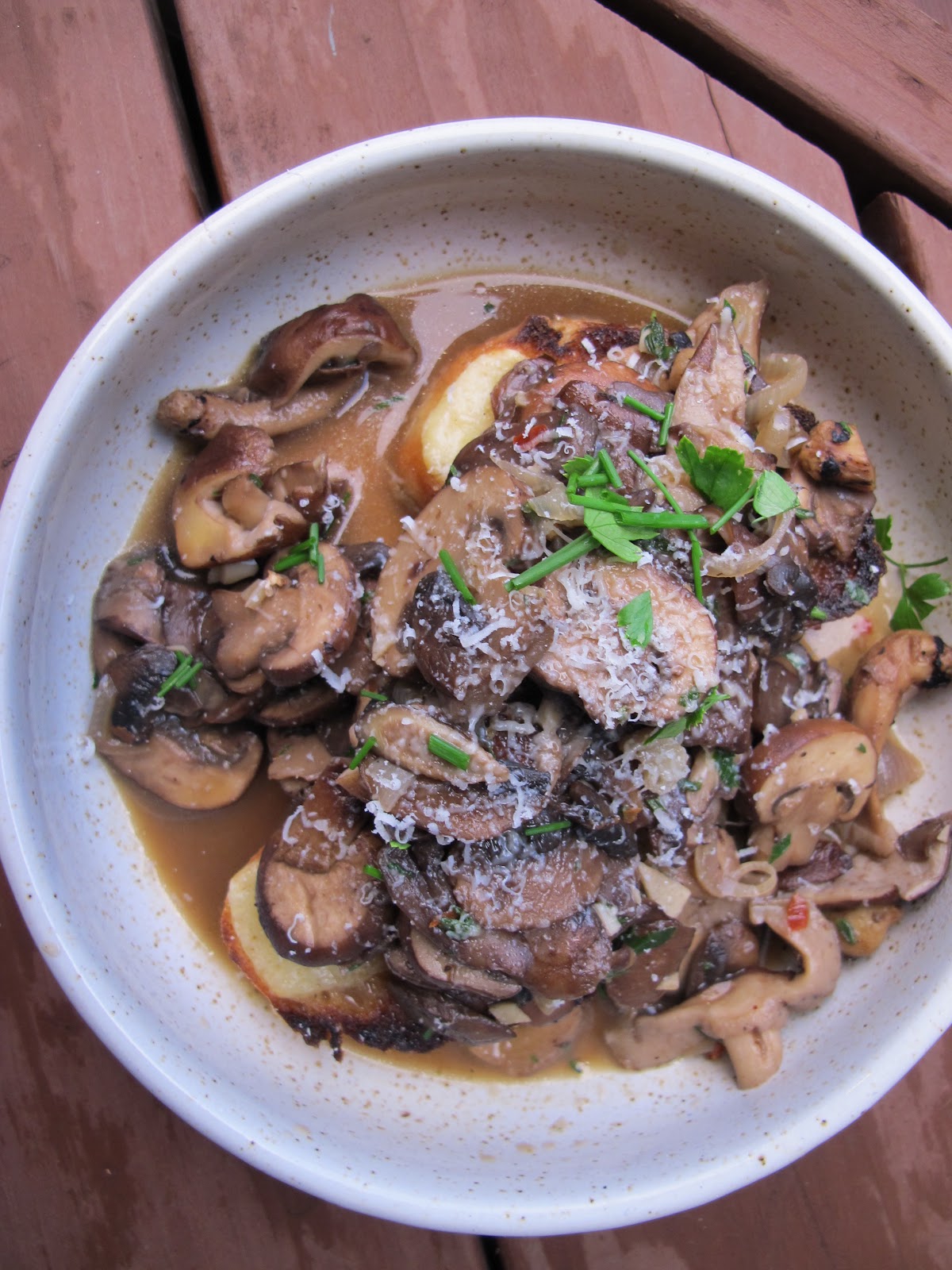
      Slip some baguette with Gruyère under a broiler.  Saute some mushrooms with garlic, shallots, herbs, broth and wine.  Spoon the mushrooms over the cheese toast.  Dinner is served.

      I grew up in a house that revered mushrooms. In any form, but mostly on their own.  Just cooked up in a big cast-iron skillet with some garlic or onions.  Eating them on their own was his favorite, but my Dad also loved them with some rice, eggs, or chicken.  He’d have mushrooms any old way.  As a little kid, I wasn’t buying.   It didn’t take long, however, for me to jump on his bandwagon.

      My first mushroom love was the famous mushroom stuffed with sausage.  That gave way to (Lord) the deep-fried variety with sauce.  All the while, regular old mushrooms slowly began to take part in my kitchen pageant.  One day I saw that I was buying mushrooms pretty much every time I went to the store.  Talking with my oldest son the other day, I woke up and realized he was talking about cooking up a big pot of mushrooms.  Never know what you’ll pass on.


      Mushrooms are inexpensive.  They’re healthy.  They’re adaptable. They’re widely available and come in many varieties.  They add vegetable and “meat” value to any dish.  Mushrooms are quick to prepare and can be eaten raw, fried, baked, sauteed, braised, or boiled.  They’re fine on their own, as a perfect omelet filling, luscious crowded together on top a steak or piece of chicken, and they just make gravy.  What’s beef burgundy without mushrooms?   How about a burger?  Portobellos, grilled, or sauteed, are perfect in a bun with all the fixings.   I’m sure there’s more!

        I don’t know a whole lot about mushroom nutrition, but here are a few things I’ve discovered: they’re full of B vitamins and lots of minerals.  In a nutshell:

      Mushrooms provide many of the nutritional attributes of produce, as well as attributes more commonly found in meat, beans or grains. Mushrooms are low in calories, fat-free, cholesterol-free and very low in sodium, yet they provide important nutrients, including selenium, potassium, riboflavin, niacin, vitamin D and more. Read on to discover some of nature’s hidden treasures found in mushrooms.  more info:  mushroom.com

      BTW:  If you’d like to pick wild mushrooms, be extremely careful, and get some training.  Many people become seriously ill every year eating poisonous mushrooms.  

      You don’t need a big herb garden.  I just have a couple of fragrant pots right outside my front door.  A little dirt.  A little water.  Not much more.  In Colorado, we’re able to bring pots of herbs indoors for the winter.

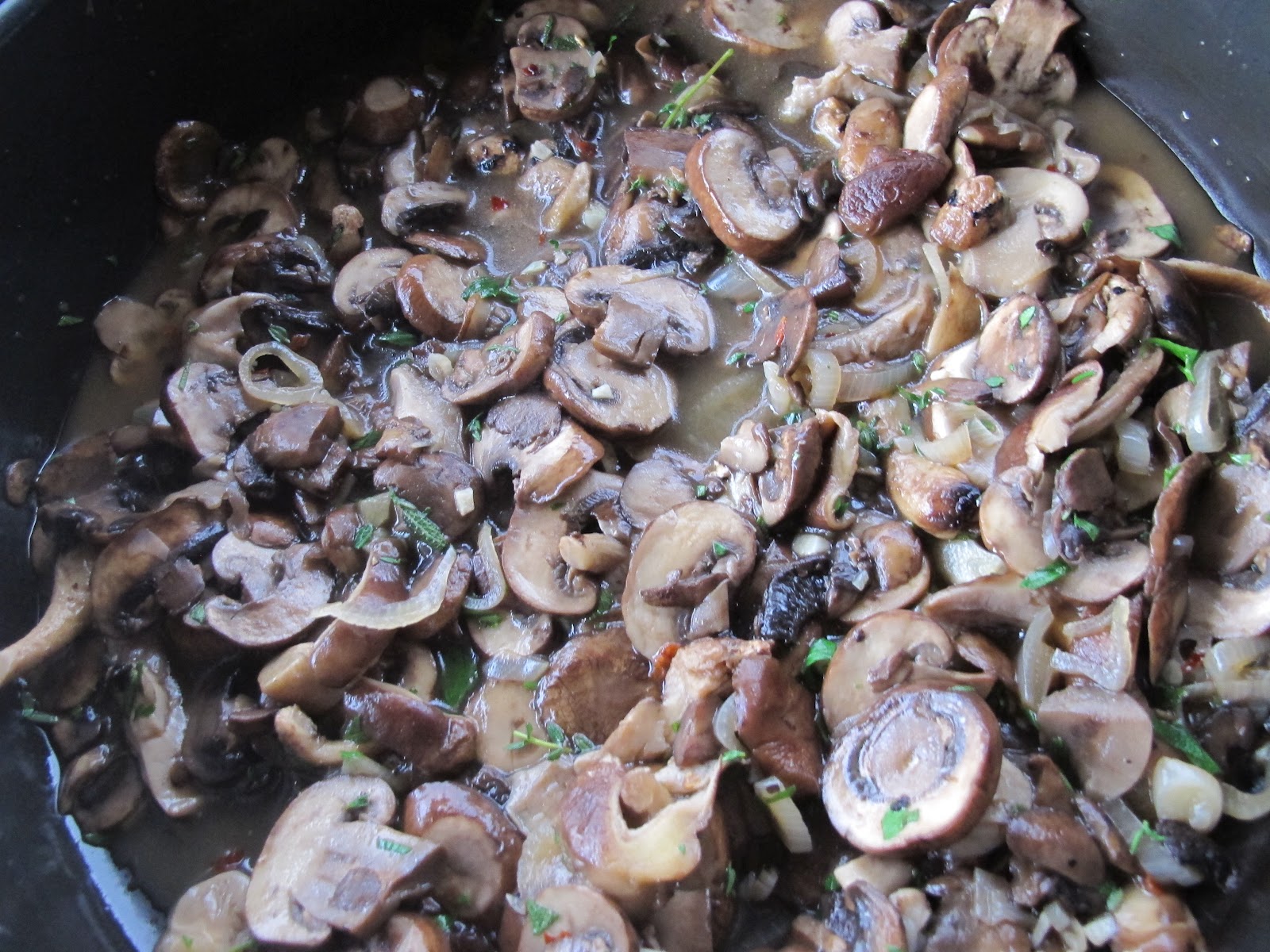
      When I realized mushrooms were up next on our 39 Healthiest Ingredients,  I began dreaming of  cooking up a big pot of them with yummy fresh herbs, shallots, etc., and spooning that over toasted baguette pieces that were topped with Gruyère.  Last night I stopped dreaming:

      mushroom ragù on gruyère toast                  serves 4

      •  8 slices baguette 
      • 8 thin slices Gruyère cheese
      • 1  T each extra virgin olive oil and butter 
      • 1/4 t crushed red pepper 
      • 24 oz any mixed mushrooms, sliced (shitake, button, crimini, portobello) 
      • 2 shallots sliced
      • 2 garlic cloves, minced
      • 2T minced mixed fresh herbs (tarragon, marjoram, chives, parsley, sage, thyme are good choices)  plus a little extra reserved for garnish
      •  1/2 cup each chicken broth, low sodium and white wine
      •  1/4 t  each kosher salt and fresh ground black pepper
      • 1/2 cup grated Parmesan cheese, optional
       Place baguette slices, topped with the Gruyère cheese, on a baking sheet and broil for about 2 minutes or until cheese is browned and bubbly.  Remove from oven and place two cheese toasts in each of four shallow bowls. Set aside.

      In a large, deep sauté pan, heat olive oil, butter, and crushed red pepper over medium heat.  Add mushrooms, shallots, and garlic.  Cook a few minutes without  stirring until mushrooms are browned.  Stir to turn mushrooms and add herbs, broth, wine, salt, and pepper.  Simmer for several  minutes, stirring occasionally until liquid is somewhat reduced.  Taste and adjust for seasoning. Divide mushroom mixture evenly over toasted cheese baguette slices. Garnish with reserved fresh herbs.  If desired, top with grated Parmesan.  Pass extra fresh ground black pepper at the table.

      For vegan option:  skip Gruyere and brush bread with olive oil before broiling.  Exchange vegetable broth for chicken and either use vegan grated cheese for garnish or no cheese at all.

      Wine?  Please serve my mushroom ragu with an Oregon Pinot Noir.  You’ll be so glad you did.  I’m partial to Ken Wright or Sineann, but there are many lovely winemakers around the Willamette valley. 

      Want more great mushroom ideas?  Check out the other beautiful 38 Healthiest Ingredient bloggers:

      Ansh – SpiceRoots.com  
      Jill – SaucyCooks 

      Sarah – Everything in the Kitchen Sink
      Anabanana – adobodownunder.blogspot.com
      .
      As we go along, I’m guessing we’ll get some other writers involved.  If you’re interested in joining the gang writing each week, get in touch with Mireya from My Healthy Eating Habits:  Mireya@MyHealthyEatingHabits.com

      Sing a new song,
      Alyce